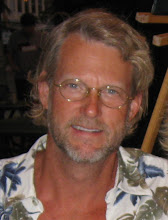
We are currently in Lienster Bay (St John) enjoying the sunrise. Last night was movie night on YOLO. We watched, “The Alphabet Killer”. Both of us are ready to get the job here done and get back to Iowa. I finished waxing the hull yesterday and Colleen got her first coat of varnish on the deck rails. I purchased a cordless buffer from Sears before leaving Iowa. Wow, what a great tool. The rechargeable lithium battery works continuous for a good 1-1/2 hours at a time. By then I’m shot anyway and look forward to the 45-minute charge. Colleen has also been micro cleaning down below. No matter how watertight you think the boat is, salt water will find its way inside when you sail it like a submarine.
We have a busy week coming up on Monday. I’m scheduled to be outhauled at the “Independent Boat Yard” in the morning. The clock will start ticking with a daily charge on dry dock, and the rental of a their power sander. I’ve asked for a shop opinion on a couple of hull issues that might require a professional repair. Once the hull is cleaned, repaired, sanded and primed, we’ll do the bottom paint at $300 per gallon. I guess mine will take two. I have no idea how long it will take to turn the boat around and get it back into the water. I’ll probably have an idea by Monday night.
Sunday, May 31, 2009

Tuesday, May 26, 2009
UPDATE
I have made flight reservations to return to Iowa on June 16, 2009. It was hard to decide on dates. I don't dare make them to early but we would really like to get home.
May 26, 2009 - Virgin Gorda
We've been piddling and fiddling while trying to enjoy the island return. We left St Thomas a few days ago. Spent a night in Lienster Bay on St John, then hit Customs and Norman Island the next day. Actually two days there before heading to Virgin Gorda yesterday.
My major project is complete. The front water tank is repaired for the 5th time. The first two times were done by VIP Yacht Charters. They re-welded some seams. My problem is corrosion on this stainless steel tank from the inside out. I am using a product called JB Weld, which I swear by. It's a pretty pricey product that is essentially liquid metal. My two previous repairs under tough conditions were down island during the 2008 Adventure trip. The first one, I used a inferior product do to availability. It didn't work well. The second repair was limited by availability of JB Weld so I was not as thorough as I would have liked. This time, I have been buying up JB Weld everywhere we've been to ensure that I could cover the perimeter of the tank. It took two boxes of the commercial size JB Weld at $28 each but I glopped that stuff on everywhere I could get too. It's normally a two day job but I did it in one. The front cabin was totally torn up and all its components stacked in the galley. So the entire boat was a mess. My tank lifting rig consists of, back and forth hoisting steps using a spare halyard line. The boat winches do the lifting. As the tank raises, I secure separate safety lines. It's all very time consuming. Since its my third time, I was able to do it in 8 long hours. I can only hope I don't have to deal with it again. But I have my doubts. The tank is too large to remove and replace without huge expense.
We're tackling other little projects. Our next big one will be June 1. YOLO will be outhauled and placed in dry dock while we service the hull. It's in really bad shape and might require some outside services to repair some delamination of the gelcoat. Otherwise, Colleen and I will be renting tools to clean and re-coat the botton. I'm not sure how many days this will involve.
Are you bored yet? I also need to replace the "stuffing box". This is the thru-hull assembly for the propeller drive shaft. At this point, I do not know if I will have the tools for this or whether I'll need to hire it done.
My major project is complete. The front water tank is repaired for the 5th time. The first two times were done by VIP Yacht Charters. They re-welded some seams. My problem is corrosion on this stainless steel tank from the inside out. I am using a product called JB Weld, which I swear by. It's a pretty pricey product that is essentially liquid metal. My two previous repairs under tough conditions were down island during the 2008 Adventure trip. The first one, I used a inferior product do to availability. It didn't work well. The second repair was limited by availability of JB Weld so I was not as thorough as I would have liked. This time, I have been buying up JB Weld everywhere we've been to ensure that I could cover the perimeter of the tank. It took two boxes of the commercial size JB Weld at $28 each but I glopped that stuff on everywhere I could get too. It's normally a two day job but I did it in one. The front cabin was totally torn up and all its components stacked in the galley. So the entire boat was a mess. My tank lifting rig consists of, back and forth hoisting steps using a spare halyard line. The boat winches do the lifting. As the tank raises, I secure separate safety lines. It's all very time consuming. Since its my third time, I was able to do it in 8 long hours. I can only hope I don't have to deal with it again. But I have my doubts. The tank is too large to remove and replace without huge expense.
We're tackling other little projects. Our next big one will be June 1. YOLO will be outhauled and placed in dry dock while we service the hull. It's in really bad shape and might require some outside services to repair some delamination of the gelcoat. Otherwise, Colleen and I will be renting tools to clean and re-coat the botton. I'm not sure how many days this will involve.
Are you bored yet? I also need to replace the "stuffing box". This is the thru-hull assembly for the propeller drive shaft. At this point, I do not know if I will have the tools for this or whether I'll need to hire it done.
Friday, May 22, 2009
May 13 through May 19, 2009 - 851 miles - St John
I don’t know where to begin sharing the story of our trip from Provo (Turks and Caicos) to St John, USVI. We traveled a total of 851 miles including tacks for the 550-mile journey. Most of the lost miles were at the beginning of the trip before we caught a reasonable ENE wind that took us to the SW for a solid three days. We almost made it all the way to the Virgin Islands without a final tack. The whole trip took 5-1/2 days, which is not bad at all.
We had very strong 25 to 30 mph winds to start with. I had reefed the main and it stayed that way for the first 2 days. I don’t tack as well when I’m reefed so this contributed to some excessive miles. We were tacking tight the entire way. This makes for a very grueling trip. The seas were pretty rough most of the time with 15 to 20 foot crests. The boat saw lots of drenchings and slamming over the seas. We both slept on deck and were in rain gear most all of the time.
The throttle linkage failed about 40 miles into the trip. So this left us with limited engine use. I did some basic checking to see if the problem was an easy fix and determined it wasn’t. At least not easy while under these kinds of sailing conditions. Fortunately, I was able to rev the rpm’s enough manually in the engine compartment for the alternator to kick in and keep the batteries up. On day 4-1/2, I decided to clamp the throttle with vise grips, at the engine, and run at 2000 rpm's the remainder of the trip. This helped us keep a tighter tack and an extra 10% on speed.
My new hand held VHF radio, which has been a godsend, failed on us. Our onboard VHF radio antenna broke and fell off a couple weeks ago. So we now have no communications.
I wish I could describe the physical dynamics of the boat motion. You are not only healing an average of 45 degrees at all times, you are also going up and down and side to side. There’s not always consistency as to which way you’re going to pitch. You never know when the rogue wave will strike the side or the unusually high crest or deep trough will send a wall of water over the bow.
I have to hand it to Colleen for managing to put meals together. Everything tastes good out there so it never mattered what it was. But it usually involved pots and pans and stove cooking. The stove is on a swivel so it always remains flat even when the boat is healed at 45 degrees. Which was the entire trip. The hard part is physically navigating yourself around the boat without losing your grip or slipping on the floor. You really can get seriously hurt. There’s so much opportunity for injury. Everything is a major effort. Just contemplating and working up the motivation to reach 5-feet across the boat for a water bottle is a major time consuming ordeal.
We had another rare circumstance where we crossed paths with a large vessel. This one really caught me off guard. It seems you can go for days without seeing land or vessels and then, low and behold, two come together, hundreds of miles off shore in the middle of nowhere. This situation was at about 11PM. The vessel was large and well lit, but I had dozed off. My watch alarm is set for 15-minute wakeup calls for this reason. The alarm went off and when I opened my eyes, there it was crossing our bow. Panic set in of course because at first, you don’t know whether it sees you or not, or which direction it is traveling. The moon had not appeared yet and our little green and red bow lights pale in comparison to the display on this thing. It took a good fifteen seconds, which seemed like an eternity, to confirm that we were out of danger.
This is what I surmised about the vessel incident. I did see a very distance glow directly off our bow in the horizon at my last visual scan. However, I saw the same glow about the same time the night before and it turned out to be the moonrise. So I discounted it, but I’m pretty sure I was wrong. The moon didn’t rise until sometime after our confrontation. Once we were all clear of this vessel, it took a direct course off of our stern. This tells me were actually on a parallel course with this boat in opposite directions. That means this boat had made an evasive maneuver to avoid a possible collision. It was perpendicular off the bow less than 100 yards when I first saw it. Then it turned back to the opposite parallel course. A large spot light kicked in on the deck of the vessel and shined our way as it went off in the distance. Had we had a working radio, I’m sure we would have heard some choice words. Which would have been very deserving. And that’s the understatement of the year.
We arrived in Caneel Bay off of St John around 3PM of May 18th. The engine would do us know good at this point since I had no control of the throttle. So we picked up a mooring ball under sail. I hadn’t done that before but I pretty much knew how. It took three tries but so what. I knew we could do it. It’s hard to fathom the dilemmas that could have evolved had we been in the Bahamas, or Turks and Caicos islands when this engine problem occurred. This is when I decided that this form of sailing is no longer an adventure. It’s just plain nuts. The Bahamas are simply unapproachable without an engine. Particular if you are unfamiliar with them as I am. It’s typical to have to motor several miles in 6 to 10 feet of water, only under high tide, through narrow reef cuts and channel markers. The approach routs aren’t there for sailboats that have to tack. So what do you do without and engine AND without a radio?? Beats the hell out of me. But I guarantee, I would have figured out something.
To sum up, I’m not doing this again. I’m not even to the stage where I can say, I’m glad I did it once for the experience. It will take some time to get to that point. This was a very hard trip. I felt really bad at times for even subjecting Colleen to this insanity. I can’t imagine what her blog will say about it? Right now, I’m just glad were home in the Virgin Islands.
My throttle cable turned out to be broken at the shifter lever end. I was able to pull the 18-feet of cable and jacket out, buy a new one off the shelf in a marine store, and install it the next day. We are back in business and now located in Red Hook, St Thomas. I’ve made a parts run to support several projects. We plan to go off to a quiet bay and get to work for a few days. I have a billion new topics to write about regarding work scopes we face. But those could get boring.
We had very strong 25 to 30 mph winds to start with. I had reefed the main and it stayed that way for the first 2 days. I don’t tack as well when I’m reefed so this contributed to some excessive miles. We were tacking tight the entire way. This makes for a very grueling trip. The seas were pretty rough most of the time with 15 to 20 foot crests. The boat saw lots of drenchings and slamming over the seas. We both slept on deck and were in rain gear most all of the time.
The throttle linkage failed about 40 miles into the trip. So this left us with limited engine use. I did some basic checking to see if the problem was an easy fix and determined it wasn’t. At least not easy while under these kinds of sailing conditions. Fortunately, I was able to rev the rpm’s enough manually in the engine compartment for the alternator to kick in and keep the batteries up. On day 4-1/2, I decided to clamp the throttle with vise grips, at the engine, and run at 2000 rpm's the remainder of the trip. This helped us keep a tighter tack and an extra 10% on speed.
My new hand held VHF radio, which has been a godsend, failed on us. Our onboard VHF radio antenna broke and fell off a couple weeks ago. So we now have no communications.
I wish I could describe the physical dynamics of the boat motion. You are not only healing an average of 45 degrees at all times, you are also going up and down and side to side. There’s not always consistency as to which way you’re going to pitch. You never know when the rogue wave will strike the side or the unusually high crest or deep trough will send a wall of water over the bow.
I have to hand it to Colleen for managing to put meals together. Everything tastes good out there so it never mattered what it was. But it usually involved pots and pans and stove cooking. The stove is on a swivel so it always remains flat even when the boat is healed at 45 degrees. Which was the entire trip. The hard part is physically navigating yourself around the boat without losing your grip or slipping on the floor. You really can get seriously hurt. There’s so much opportunity for injury. Everything is a major effort. Just contemplating and working up the motivation to reach 5-feet across the boat for a water bottle is a major time consuming ordeal.
We had another rare circumstance where we crossed paths with a large vessel. This one really caught me off guard. It seems you can go for days without seeing land or vessels and then, low and behold, two come together, hundreds of miles off shore in the middle of nowhere. This situation was at about 11PM. The vessel was large and well lit, but I had dozed off. My watch alarm is set for 15-minute wakeup calls for this reason. The alarm went off and when I opened my eyes, there it was crossing our bow. Panic set in of course because at first, you don’t know whether it sees you or not, or which direction it is traveling. The moon had not appeared yet and our little green and red bow lights pale in comparison to the display on this thing. It took a good fifteen seconds, which seemed like an eternity, to confirm that we were out of danger.
This is what I surmised about the vessel incident. I did see a very distance glow directly off our bow in the horizon at my last visual scan. However, I saw the same glow about the same time the night before and it turned out to be the moonrise. So I discounted it, but I’m pretty sure I was wrong. The moon didn’t rise until sometime after our confrontation. Once we were all clear of this vessel, it took a direct course off of our stern. This tells me were actually on a parallel course with this boat in opposite directions. That means this boat had made an evasive maneuver to avoid a possible collision. It was perpendicular off the bow less than 100 yards when I first saw it. Then it turned back to the opposite parallel course. A large spot light kicked in on the deck of the vessel and shined our way as it went off in the distance. Had we had a working radio, I’m sure we would have heard some choice words. Which would have been very deserving. And that’s the understatement of the year.
We arrived in Caneel Bay off of St John around 3PM of May 18th. The engine would do us know good at this point since I had no control of the throttle. So we picked up a mooring ball under sail. I hadn’t done that before but I pretty much knew how. It took three tries but so what. I knew we could do it. It’s hard to fathom the dilemmas that could have evolved had we been in the Bahamas, or Turks and Caicos islands when this engine problem occurred. This is when I decided that this form of sailing is no longer an adventure. It’s just plain nuts. The Bahamas are simply unapproachable without an engine. Particular if you are unfamiliar with them as I am. It’s typical to have to motor several miles in 6 to 10 feet of water, only under high tide, through narrow reef cuts and channel markers. The approach routs aren’t there for sailboats that have to tack. So what do you do without and engine AND without a radio?? Beats the hell out of me. But I guarantee, I would have figured out something.
To sum up, I’m not doing this again. I’m not even to the stage where I can say, I’m glad I did it once for the experience. It will take some time to get to that point. This was a very hard trip. I felt really bad at times for even subjecting Colleen to this insanity. I can’t imagine what her blog will say about it? Right now, I’m just glad were home in the Virgin Islands.
My throttle cable turned out to be broken at the shifter lever end. I was able to pull the 18-feet of cable and jacket out, buy a new one off the shelf in a marine store, and install it the next day. We are back in business and now located in Red Hook, St Thomas. I’ve made a parts run to support several projects. We plan to go off to a quiet bay and get to work for a few days. I have a billion new topics to write about regarding work scopes we face. But those could get boring.
May 12, 2009 - Provo, Turks and Caicos
I'm looking at Wednesday as a departure date. I hope to make the full hop to the Virgin Islands. It could be 6-10 days. Hard telling but I think the timing is as good as it will get. Our neighbors are leaving today for the BVI. I think their boat sails itself.
I helped the 54 foot neighbor boat get off today. Yea, even the big guys have problems. We have a strong side wind that makes it tough. But to make matters worse, the are unable to pull in their entire main sail. It furls up inside the mast but there's a boring problem relating to its full function. It caused windage problems in the crosswind. Then their bow thrusters weren't working this morning. So I used the dinghy to make up for their problems. They had three people, plus me. It was still a rough exit. I hope ours goes better tomorrow. It will be just Colleen and I.
I helped the 54 foot neighbor boat get off today. Yea, even the big guys have problems. We have a strong side wind that makes it tough. But to make matters worse, the are unable to pull in their entire main sail. It furls up inside the mast but there's a boring problem relating to its full function. It caused windage problems in the crosswind. Then their bow thrusters weren't working this morning. So I used the dinghy to make up for their problems. They had three people, plus me. It was still a rough exit. I hope ours goes better tomorrow. It will be just Colleen and I.
Tuesday, May 12, 2009
UPDATE
I'm looking at Wednesday as a departure date. I hope to make the full hop to the Virgin Islands. It could be 6-10 days. It's 550 miles as the crow flies. So our tacks will make it more. Hard telling but I think the timing is as good as it will get. Our neighbors are leaving today for the BVI. I think their boat sails itself.
By the way, I used statuted miles on the blog and website as opposed to nautical miles.
By the way, I used statuted miles on the blog and website as opposed to nautical miles.
May 11, 2009 - Provo, Turks and Caicos
It was a pretty uneventful day of tackling little projects on the boat. We still have a terrible red stain on the hull from the intercoastal waterway. It's caused from a certain plant root. It is not coming off so we really look shabby. Particularly compared to our neighbor boat. A new 54 foot Jeanneau, fully loaded. The dealer is serving as captain for the owner.
We went out for another long swim today. Very nice warm water. Must prepare for many days of inactivity.
We went out for another long swim today. Very nice warm water. Must prepare for many days of inactivity.
Subscribe to:
Posts (Atom)